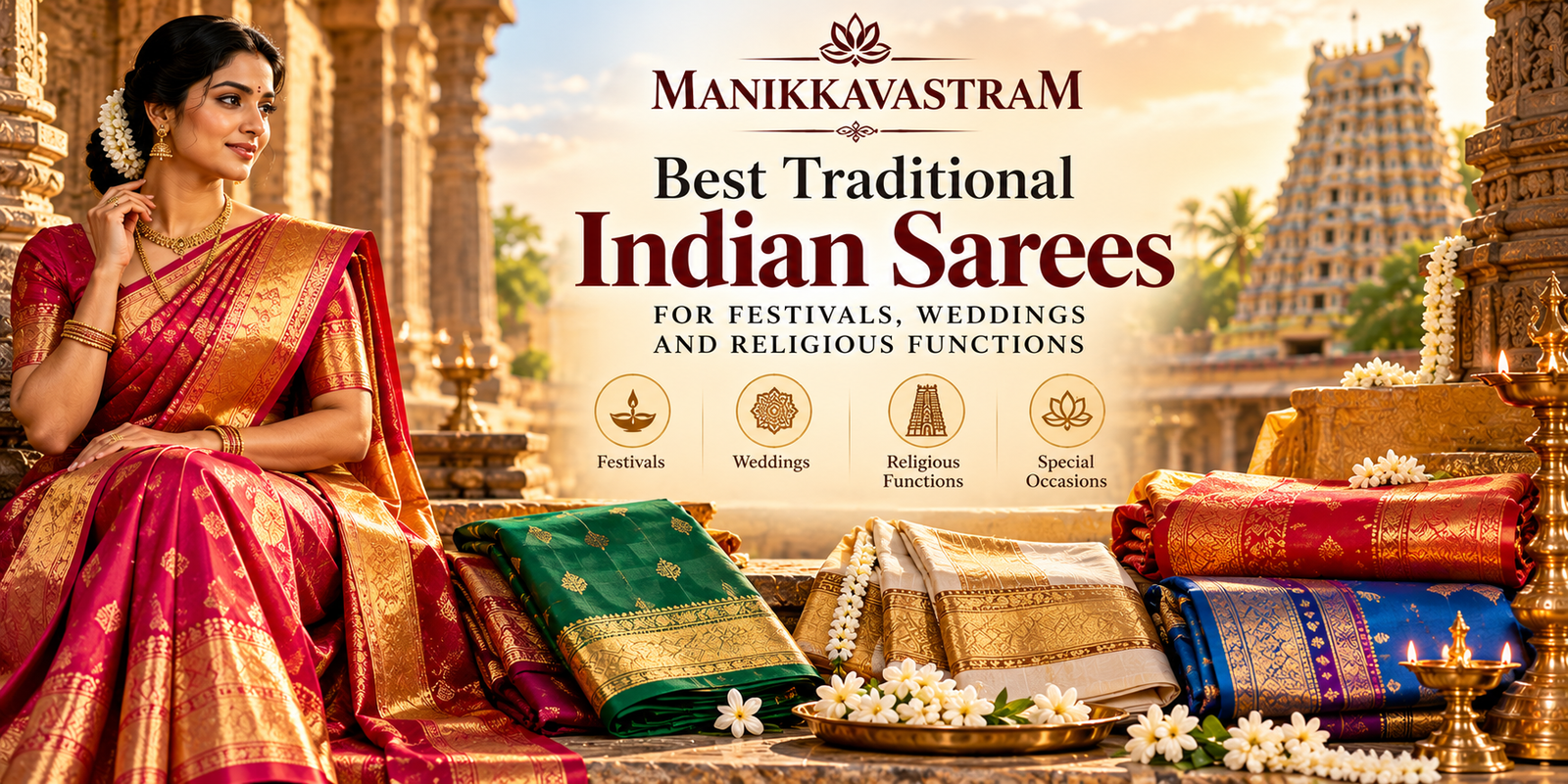
Best Traditional Indian Sarees for Festivals, Weddings and Religious Functions
Best Traditional Indian Sarees for Festivals, Weddings and Religious Functions
Manikkavastram — Where Tradition Becomes Timeless
Indian sarees are more than beautiful garments. They represent centuries of tradition, cultural heritage, craftsmanship, and timeless elegance. From family weddings and religious ceremonies to festive celebrations and temple visits, traditional Indian sarees continue to hold a special place in the hearts of women across generations.
Whether you are searching for a traditional saree for Diwali, an elegant saree for a wedding, or beautiful ethnic wear for a religious function, choosing the right saree can make every occasion more memorable.
At Manikkavastram, we celebrate the beauty of traditional Indian clothing and the cultural significance of sarees worn during important moments in life.
In this guide, we explore different types of traditional Indian sarees, how to choose the right saree for various occasions, what to consider when shopping online, and how to maintain your sarees for years to come.
1. Why Are Traditional Indian Sarees So Special?
The saree is one of India's most recognised traditional garments. Worn in different styles across the country, it reflects regional cultures, textile traditions, and personal expression.
Traditional sarees are popular for their elegant appearance, distinctive borders, beautiful colours, and versatility.
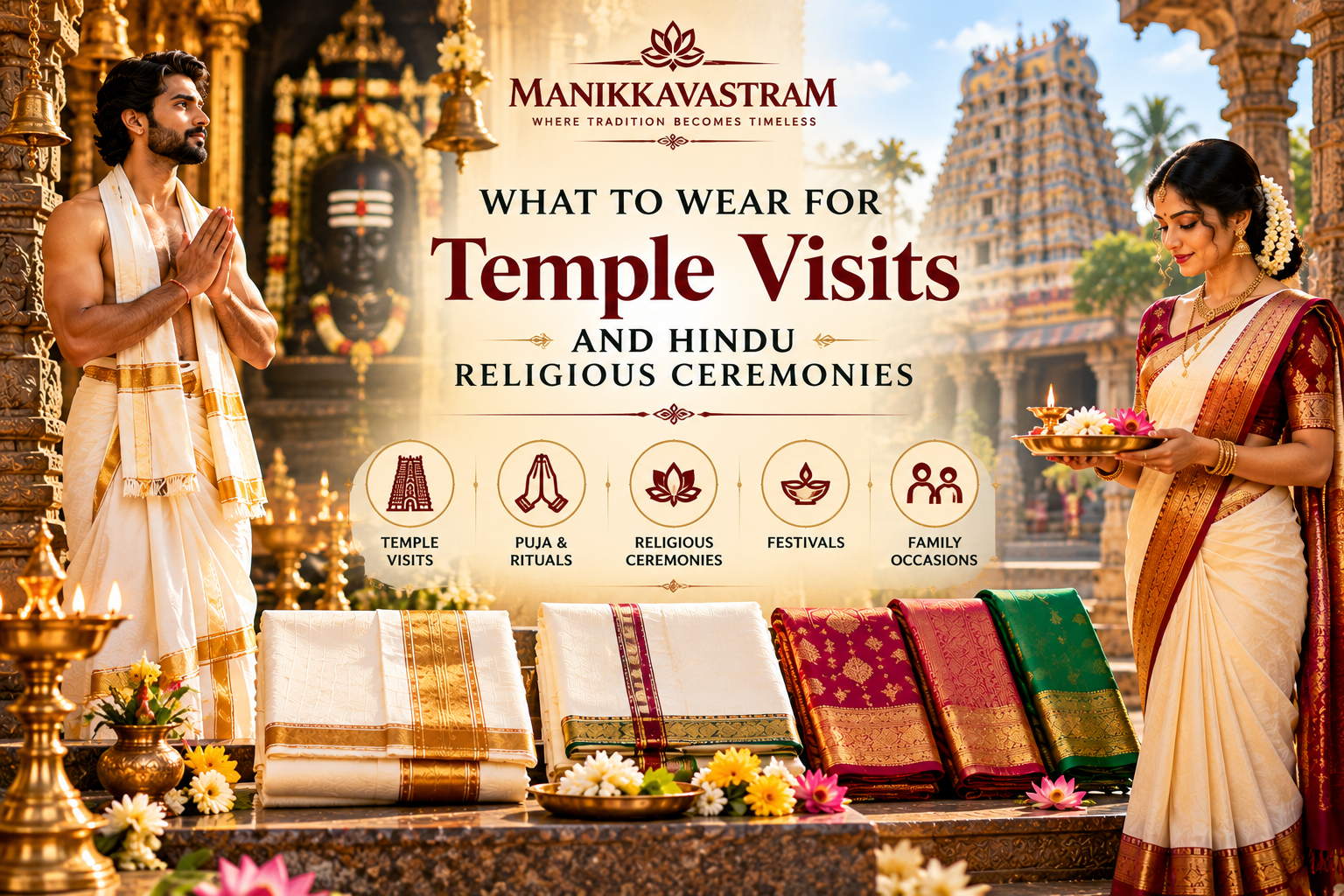
Women wear sarees for a wide range of occasions, including:
- Hindu religious ceremonies and puja
- Weddings and engagement ceremonies
- Diwali and other festivals
- Navratri and Durga Puja celebrations
- Pongal and regional festivals
- Temple visits and religious gatherings
- Family functions and cultural events
- Traditional celebrations and special occasions
Different sarees offer different appearances depending on their fabric, weave, border, colours, and design.
When selecting a saree, consider the occasion, your preferred style, the weather, and the level of comfort you want.
Traditional Indian sarees remain a beautiful choice for women who appreciate cultural elegance and timeless fashion.
2. Traditional Sarees for Festivals
Indian festivals are occasions for families to come together, celebrate traditions, and create lasting memories.
Traditional clothing plays an important role in these celebrations, and sarees remain a popular choice for women who want to embrace festive elegance.
Sarees for Diwali
Diwali is celebrated with lights, prayers, family gatherings, and festive decorations.
Traditional sarees in colours such as red, green, maroon, gold, and other festive shades can be suitable for the occasion.
Choose a saree based on its fabric, border design, colour, and comfort.
A traditional saree can be styled with jewellery and accessories to create a festive appearance.
Sarees for Navratri
Navratri is celebrated with devotion, cultural programmes, and traditional festivities.
Depending on regional customs, women may choose colourful sarees or other traditional outfits for puja and celebrations.
Bright colours, decorative borders, and traditional designs can create a festive look.
Sarees for Pongal and South Indian Festivals
Pongal and other South Indian festivals celebrate tradition, family, and cultural heritage.
Traditional sarees are popular choices for puja, family gatherings, and festive occasions.
When choosing a saree for these festivals, consider your preferred regional style, the occasion, and the comfort of the fabric.
Sarees for Other Religious Festivals
Traditional sarees can also be worn during Ugadi, Durga Puja, Janmashtami, and other cultural or religious occasions.
The most suitable style depends on the festival, regional customs, and personal preference.
Shopping tip: Before buying a festive saree online, check the fabric composition, measurements, border design, and product photographs carefully.
3. Traditional Indian Sarees for Weddings
Indian weddings are rich in cultural traditions, meaningful rituals, and beautiful clothing.
From the wedding ceremony to family celebrations and pre-wedding functions, sarees remain an important part of traditional wedding attire.
The ideal wedding saree depends on the type of ceremony, personal preferences, regional customs, and the overall style of the event.
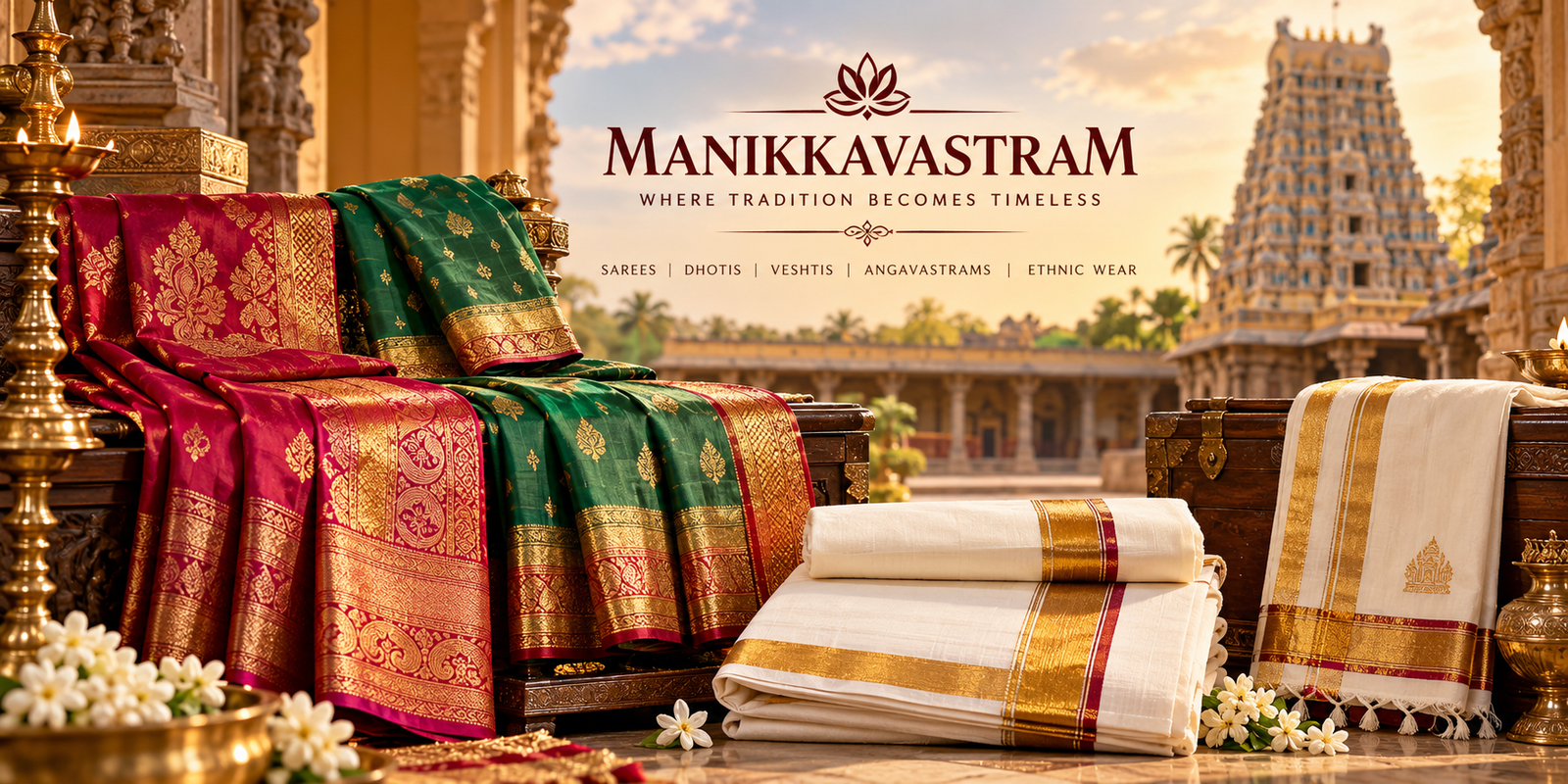
Silk Sarees for Weddings
Silk sarees are often associated with weddings and important family occasions.
They are admired for their traditional appearance, elegant draping, and decorative designs.
Silk sarees may feature intricate patterns, contrasting borders, and rich colours.
When choosing a silk saree, carefully check the product description to confirm the fabric composition. Different products may use different types of silk or fabric blends.
Red and Maroon Traditional Sarees
Red and maroon are popular colours in many Indian wedding traditions.
These colours can create a rich, traditional appearance and are often selected for wedding ceremonies and family celebrations.
However, wedding attire varies across regions, and other colours may be equally appropriate depending on personal preference and the occasion.
Green Traditional Sarees
Green sarees are another popular option for traditional functions.
They can be suitable for festivals, religious ceremonies, weddings, and family gatherings.
A green saree with a contrasting border can create a distinctive traditional look.
Sarees for Wedding Guests
If you are attending a wedding as a guest, consider choosing a saree that suits the ceremony and your personal style.
Review the event's dress expectations, the season, and the comfort of the fabric.
Traditional sarees offer many styling possibilities, making them suitable for different types of wedding celebrations.
4. Sarees for Religious Functions and Temple Visits
Traditional sarees are widely worn during religious ceremonies and temple visits.
Many women prefer traditional Indian attire when participating in puja, special worship, family rituals, and spiritual gatherings.
Sarees for Hindu Puja
For Hindu puja and religious functions, women may choose sarees in traditional colours and designs.
The most suitable choice depends on personal preference, regional traditions, and the requirements of the ceremony.
Comfort is also important, particularly if you will be attending a long ritual or participating in activities that require movement.
Sarees for Temple Visits
Traditional sarees can be a graceful option for temple visits.
However, temple dress codes may vary. Always check any specific requirements before visiting.
Choose a saree that is comfortable to wear and appropriate for the occasion.
Sarees for Special Religious Ceremonies
Religious ceremonies, family pujas, and cultural gatherings often provide opportunities to wear traditional clothing.
Depending on the occasion, you may prefer a simple saree or one with a more decorative border.
When purchasing a saree for religious functions, look for accurate product descriptions, clear photographs, and details about the fabric.
At Manikkavastram, our focus is on helping customers explore traditional Indian clothing inspired by India's rich cultural heritage.
5. How to Choose the Best Traditional Saree
With so many colours, fabrics, and designs available, choosing the right saree can feel overwhelming.
The following tips can help you make a more informed decision.
Consider the Occasion
Start by identifying where you plan to wear the saree.
A wedding, religious ceremony, festive celebration, and family gathering may each call for a different style.
Consider whether you prefer a simple traditional appearance or a more decorative design.
Choose the Right Fabric
Fabric affects how a saree feels, drapes, and looks.
When shopping online, read the fabric composition carefully.
If you specifically want a silk saree or cotton saree, confirm the material listed in the product description rather than relying only on photographs.
Select a Suitable Colour
Colour is an important part of choosing a traditional saree.
Popular choices include:
- Red and maroon
- Green
- Gold and cream
- Blue
- Pink
- Purple
- Orange
- Other traditional and festive shades
Choose a colour that suits the occasion and your personal preferences.
Check the Border Design
The border can significantly influence the appearance of a saree.
Traditional sarees may feature contrasting borders, decorative motifs, geometric patterns, or other designs.
Review the product photographs and description to understand the border's colour and style.
Review the Saree Length and Measurements
Before purchasing, check the saree's listed measurements.
If a blouse piece is included, verify its details in the product description.
Do not assume that every saree includes an attached blouse piece.
Consider Comfort and Ease of Draping
Your comfort is important when choosing a saree.
Consider the fabric, weight, occasion, and the length of time you expect to wear it.
Choosing a saree that suits your needs can make festivals and celebrations more enjoyable.
6. Popular Traditional Saree Colours and Their Appeal
Colour can influence the overall appearance of a traditional saree.
Here are some popular choices and the styles they can create.
Red Sarees: Often associated with weddings, celebrations, and traditional occasions.
Green Sarees: A popular option for festive wear, religious functions, and family ceremonies.
Maroon Sarees: Suitable for women who prefer a rich, traditional appearance.
Cream and Gold Sarees: Often chosen for South Indian traditional functions and elegant celebrations.
Blue Sarees: Available in a wide variety of traditional and contemporary designs.
Pink Sarees: A versatile option for festivals, family gatherings, and special occasions.
Purple Sarees: A distinctive choice for women who enjoy colourful traditional attire.
The significance of colours varies between regions, communities, and ceremonies. Choose a saree that suits your occasion and personal style.
7. South Indian Traditional Sarees: A Celebration of Heritage
South India has a rich textile heritage, with traditional clothing playing an important role in religious ceremonies, weddings, and cultural celebrations.
South Indian traditional sarees are appreciated for their elegant draping, distinctive borders, traditional patterns, and variety of colours.
Women often choose traditional sarees for temple visits, family functions, festivals, and wedding ceremonies.
What to Look for in a South Indian Saree
When selecting a South Indian traditional saree, consider:
- Fabric composition
- Border colour and pattern
- Overall design
- Saree length
- Blouse piece details, if applicable
- Intended occasion
- Care instructions
Traditional sarees come in different styles and fabric types. Always check the individual product description to confirm the characteristics of the saree you are purchasing.
Whether you prefer a classic cream-coloured saree or a colourful traditional design, choose a style that reflects your preferences and suits the occasion.
8. How to Buy Traditional Sarees Online
Online shopping makes it convenient to explore traditional sarees from home.
However, product photographs may not always show every detail of the fabric, texture, or colour. Reviewing the product description is therefore essential.
Before purchasing a saree online, follow these steps.
1. Check the Fabric: Confirm whether the saree is cotton, silk, or another material.
2. Review the Colour: Examine the product photographs and description for the listed colour.
3. Inspect the Border: Check the border design, colour combination, and pattern.
4. Read the Measurements: Review the saree length and any available blouse piece information.
5. Examine Product Images: Look at all available photographs to understand the design.
6. Check Care Instructions: Review the recommended washing and storage methods.
7. Read the Shipping Policy: Understand the delivery charges, timelines, and service availability.
8. Review the Return Policy: Check the store's return and exchange conditions before ordering.
9. Contact the Seller if Necessary: Ask questions about product details that are not clearly mentioned.
These simple steps can help you choose a saree that better matches your expectations.
9. How to Care for Your Traditional Sarees
Proper care can help maintain the appearance and condition of your sarees.
Different fabrics require different care methods, so always follow the product-specific instructions.
Follow the Recommended Washing Method
Check whether the saree requires hand washing, machine washing, or professional cleaning.
Do not assume that every traditional saree can be washed in the same way.
Protect Decorative Borders
Handle decorative borders carefully during washing, drying, and storage.
Avoid cleaning methods that may damage the fabric or decorative elements.
Store Sarees Properly
Keep sarees in a clean, dry place.
Fold them carefully and avoid exposing them to excessive moisture.
Protect Colours and Fabric
Follow the recommended care instructions to help maintain the fabric's appearance.
When storing sarees for long periods, inspect them occasionally and refold them as needed.
With appropriate care, your traditional sarees can remain an important part of your wardrobe for many occasions.
10. Discover Traditional Indian Clothing at Manikkavastram
At Manikkavastram, we celebrate the beauty of traditional Indian clothing and its connection to culture, heritage, and family traditions.
Whether you are preparing for a festival, looking for traditional clothing for a wedding, or choosing attire for a religious ceremony, selecting the right garment can make the occasion more special.
We encourage customers to explore traditional clothing, review product details, and choose garments that match their preferences.
From traditional sarees to men's ethnic wear, Indian clothing continues to bring together timeless elegance and cultural identity.
Visit Manikkavastram to explore our available collections and discover traditional styles for meaningful occasions.
Website: https://manikkavastram.com/
Manikkavastram — Where Tradition Becomes Timeless.
Frequently Asked Questions About Traditional Indian Sarees
1. Which saree is best for festivals?
Traditional sarees in festive colours such as red, green, maroon, pink, and gold can be suitable for festivals. Choose according to the occasion, regional customs, fabric, and personal preference.
2. Which saree is suitable for weddings?
Traditional silk sarees and other elegant sarees are popular choices for weddings. The most suitable option depends on the wedding ceremony, regional traditions, and the wearer's preferences.
3. Can I wear a traditional saree for temple visits?
Yes, a traditional saree can be suitable for temple visits. However, temple dress requirements vary, so check any specific guidelines before visiting.
4. What should I check before buying a saree online?
Check the fabric composition, colour, border design, length, blouse piece details if applicable, product photographs, care instructions, shipping policy, and return conditions.
5. Are South Indian sarees suitable for religious functions?
Traditional South Indian sarees are commonly worn for religious functions, family pujas, temple visits, and cultural ceremonies. Choose a style that suits the occasion and your personal preferences.
6. How do I maintain a traditional saree?
Follow the care instructions provided for the specific fabric. Store the saree in a clean, dry place and handle decorative borders carefully.
7. Which saree colours are popular for religious functions?
Red, green, maroon, cream, gold, and other traditional colours are popular choices. Preferences vary according to regional customs and the type of ceremony.
8. Where can I buy traditional Indian clothing online?
You can explore traditional Indian clothing through online ethnic wear stores. Visit Manikkavastram at https://manikkavastram.com/ to explore the available collections.
Conclusion: Celebrate Every Occasion with Traditional Indian Sarees
Traditional Indian sarees continue to be cherished for their elegance, cultural significance, and versatility.
From festive celebrations and weddings to temple visits and religious ceremonies, the right saree can help you celebrate important occasions while honouring India's rich clothing heritage.
When shopping for a traditional saree, consider the fabric, colour, border design, measurements, and intended occasion.
At Manikkavastram, we celebrate traditional Indian clothing and the timeless styles that connect generations.
Explore our website and discover traditional clothing for your special moments.
Manikkavastram — Where Tradition Becomes Timeless.