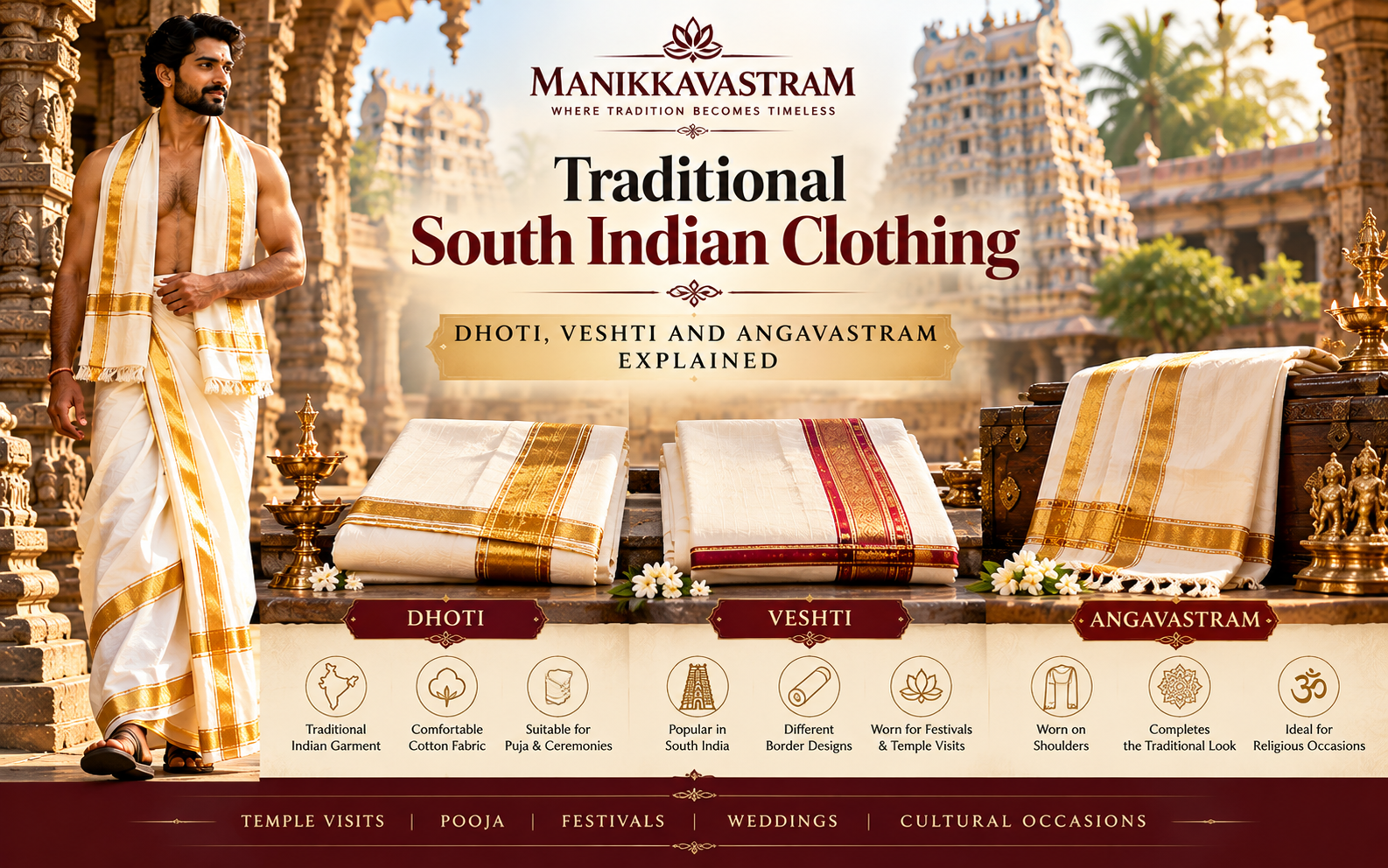
Traditional South Indian Clothing: Dhoti, Veshti and Angavastram Explained
Traditional South Indian Clothing: Dhoti, Veshti and Angavastram Explained
Manikkavastram — Where Tradition Becomes Timeless
South Indian traditional clothing is a beautiful expression of India's cultural heritage. From the timeless elegance of a white dhoti to the traditional South Indian veshti and the graceful angavastram worn over the shoulders, these garments continue to hold a special place in religious ceremonies, temple visits, weddings, festivals, and family celebrations.
Traditional clothing is not simply about appearance. It reflects regional customs, cultural identity, and traditions passed down through generations.
Whether you are preparing for a temple visit, attending a Hindu religious ceremony, celebrating a festival, or looking for traditional men's clothing for a special occasion, understanding these garments can help you choose the right outfit.
In this guide, Manikkavastram explains the differences between a dhoti, veshti, and angavastram, how these traditional garments are worn, and what to consider when purchasing South Indian traditional clothing online.
1. What Is South Indian Traditional Clothing?
South Indian traditional clothing includes garments associated with the cultural traditions of Tamil Nadu, Kerala, Karnataka, Andhra Pradesh, and Telangana.
These garments are commonly worn during religious ceremonies, weddings, temple visits, festivals, and other cultural occasions.
Some popular examples of South Indian traditional clothing include:
- Men's traditional dhoti
- White cotton dhoti
- South Indian veshti
- Dhoti with a golden border
- Traditional angavastram
- Men's ethnic wear for weddings
- Traditional clothing for temple visits
- Festive and religious clothing
Among these garments, the dhoti, veshti, and angavastram are particularly well known.
Although their styles and regional names may differ, all three are associated with the rich heritage of traditional Indian attire.
At Manikkavastram, we celebrate this timeless clothing tradition by helping customers explore traditional garments for different occasions.
2. What Is a Dhoti?
A dhoti is a traditional Indian garment worn around the waist and legs. It is generally made from a rectangular piece of fabric that is wrapped and tucked into place.
Dhotis are worn in different styles across India, with variations in fabric, length, border design, and draping techniques.
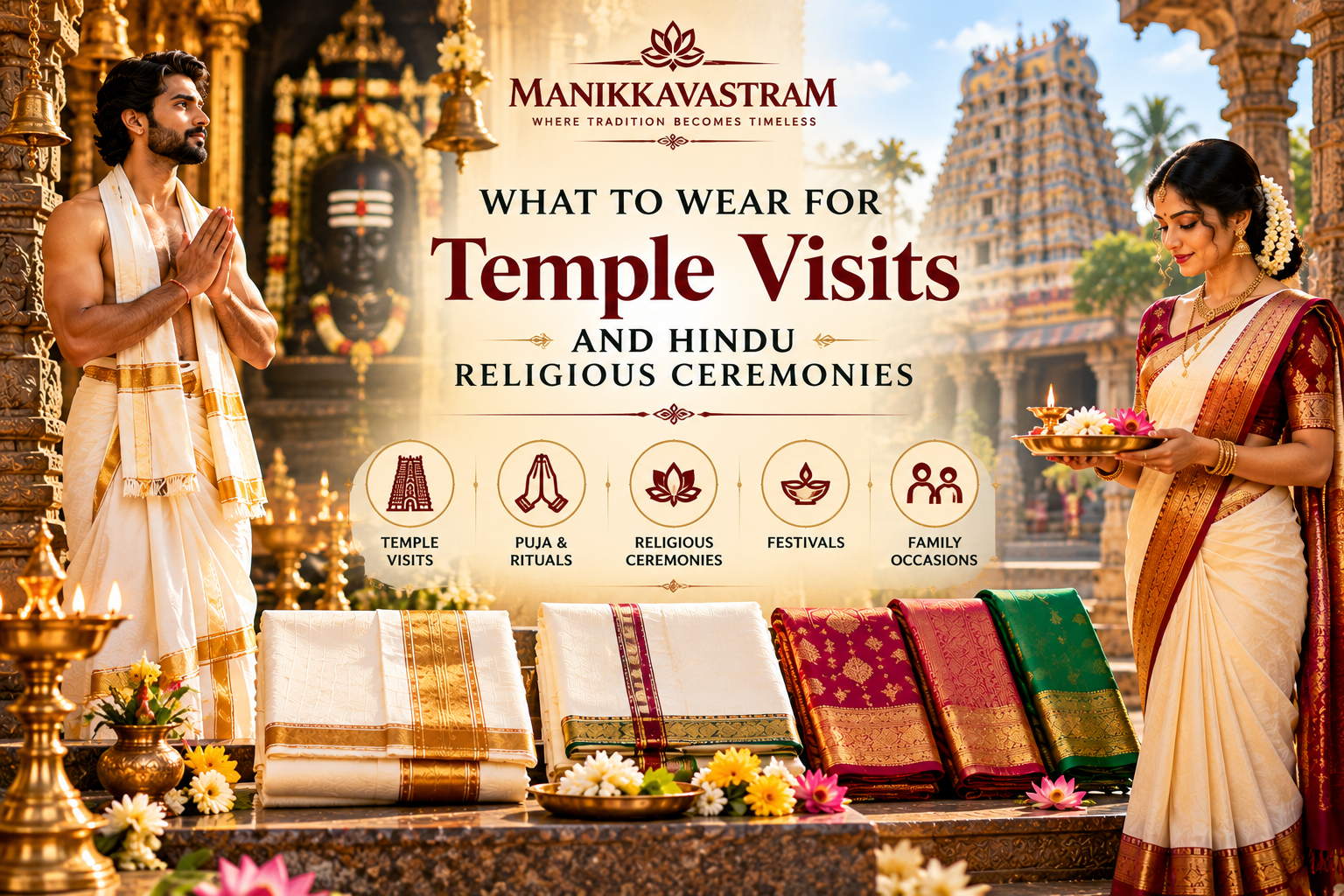
In South India, a white dhoti is a popular choice for men attending temple visits, religious ceremonies, cultural gatherings, and traditional family functions.
Popular Types of Men's Dhotis
White Cotton Dhoti
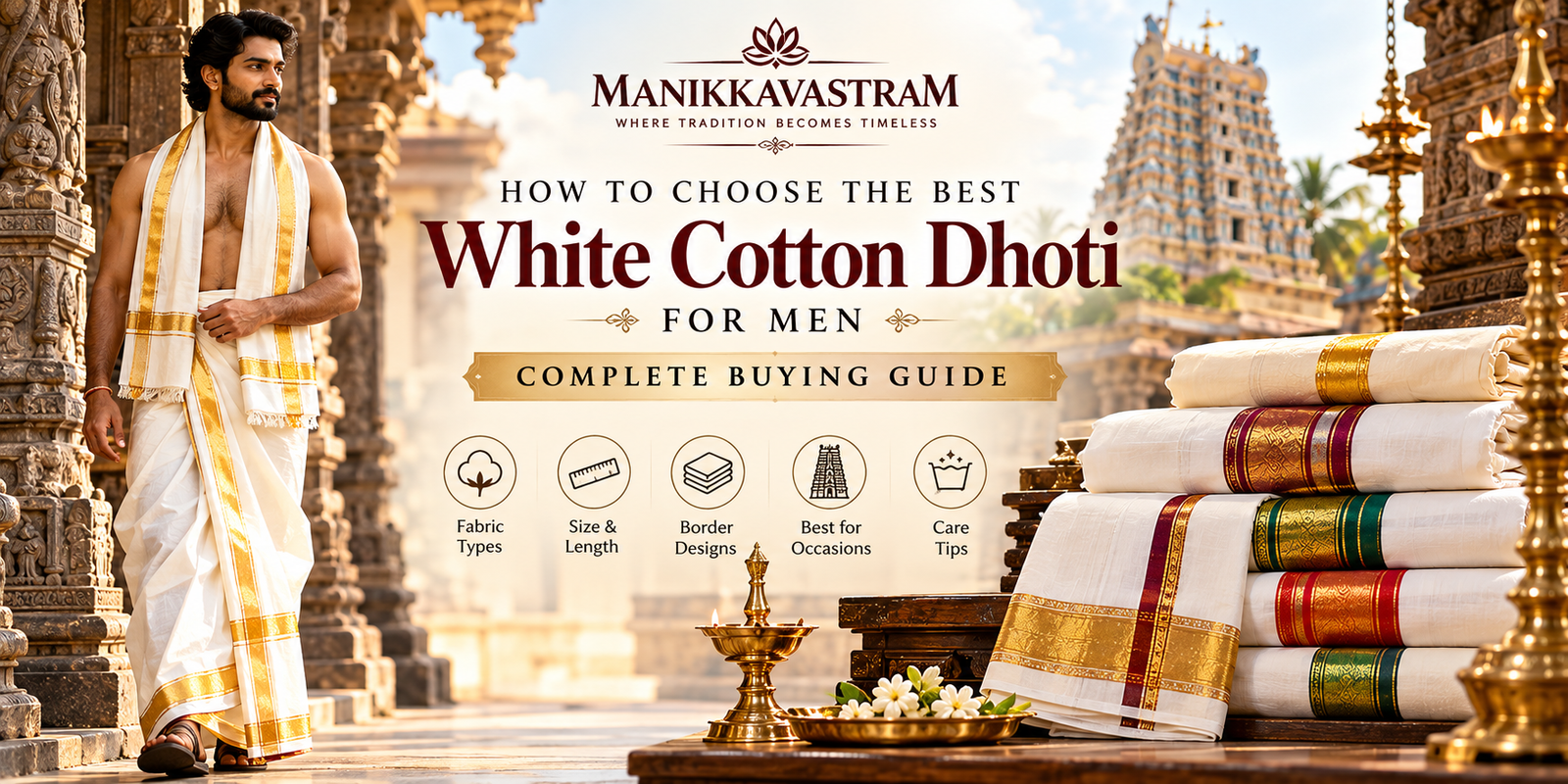
A white cotton dhoti is a classic option for men who prefer traditional clothing. Cotton garments are often chosen for their comfort, particularly in warm weather.
White Dhoti with Golden Border
A white dhoti with a golden border offers a decorative traditional appearance. It is often selected for weddings, festivals, religious ceremonies, and other special occasions.
Dhoti with Coloured Border
Dhotis may also feature borders in colours such as maroon, red, green, and other traditional shades.
Traditional Dhoti for Puja
Many men choose a traditional dhoti for daily worship, temple visits, and Hindu religious ceremonies. The appropriate clothing may depend on the customs of the ceremony or temple.
When Can You Wear a Traditional Dhoti?
A men's dhoti can be suitable for:
- Daily puja and worship
- Shiva puja and other Hindu religious ceremonies
- Temple visits and darshan
- Weddings and traditional functions
- Festivals such as Diwali and Pongal
- Cultural celebrations
- Spiritual gatherings
If you are looking for traditional men's clothing, explore the Manikkavastram Men's Dhoti Collection to discover the available styles.
3. What Is a Veshti?
A veshti is a traditional garment worn by men, particularly associated with Tamil Nadu and other South Indian clothing traditions.
Like a dhoti, a veshti is typically a rectangular piece of fabric wrapped around the waist and legs.
The word veshti is commonly used in Tamil Nadu, while dhoti is a more widely used term across different parts of India.
Although the terms are sometimes used interchangeably, local traditions, designs, and wearing styles can differ.
Features of a Traditional South Indian Veshti
A traditional veshti may feature:
- A white or cream-coloured base
- A simple, elegant design
- Golden or coloured borders
- Cotton or other fabric compositions
- Different lengths and widths
The specific features depend on the garment and its regional style.
When Is a Veshti Worn?
A veshti is commonly worn for:
Temple Visits: Traditional white veshtis are a popular choice for men visiting temples, subject to the temple's dress requirements.
Religious Ceremonies: Veshtis are worn during various Hindu rituals and religious functions.
Weddings: Traditional veshtis can be part of wedding attire, particularly for ceremonies following South Indian customs.
Festivals: Many people choose traditional clothing for festivals and family celebrations.
Cultural Events: A veshti can be suitable for cultural gatherings and traditional functions.
When shopping for a veshti online, check the product measurements, fabric composition, border design, and care instructions.
4. What Is an Angavastram?
An angavastram is a traditional piece of cloth worn over the shoulders or upper body. It is associated with traditional men's attire in several parts of India, including South India.
It is often paired with a dhoti or veshti to complete a traditional outfit.
Angavastrams may be plain or feature decorative borders. Their fabric, colour, and design vary depending on regional traditions and the occasion.
How Is an Angavastram Worn?
An angavastram is generally draped over one or both shoulders.
The way it is worn may depend on the occasion, regional customs, and personal preference.
It can be paired with a traditional dhoti or veshti to create a coordinated appearance.
When Is an Angavastram Used?
Traditional angavastrams are commonly associated with:
- Hindu religious ceremonies
- Temple visits
- Traditional weddings
- Cultural functions
- Festival celebrations
- Religious gatherings
- Formal traditional occasions
For a coordinated traditional outfit, consider pairing a white dhoti with an angavastram featuring a complementary border.
Before purchasing, review the product description to understand the fabric, dimensions, and design.
5. Dhoti vs Veshti vs Angavastram: What Is the Difference?
Although these three garments are connected with traditional Indian clothing, they serve different purposes.
| Feature | Dhoti | Veshti | Angavastram |
|---|---|---|---|
| Main purpose | Worn around the waist and legs | Worn around the waist and legs | Usually worn over the shoulders |
| Regional association | Used across several Indian regions | Particularly associated with South Indian traditions | Used in several Indian traditional clothing traditions |
| Common colours | White, cream, and other colours | White, cream, and other colours | White, cream, and other colours |
| Design options | Plain or decorative borders | Plain or decorative borders | Plain or decorative borders |
| Common occasions | Puja, weddings, festivals, and cultural events | Temple visits, weddings, and religious ceremonies | Religious functions, weddings, and cultural occasions |
| Styling | Wrapped and tucked around the waist and legs | Wrapped and tucked around the waist and legs | Draped over the shoulders or upper body |
The main distinction: A dhoti and a veshti are worn around the waist and legs, whereas an angavastram is generally worn over the shoulders.
The terms dhoti and veshti can overlap in everyday usage. Their precise meaning and style may vary according to regional customs.
6. How to Choose the Right Dhoti for Traditional Occasions
Choosing the right dhoti depends on the occasion, your preferred style, the fabric, and the garment's measurements.
Here are some useful factors to consider.
Choose the Right Fabric
Check the product description to confirm whether the dhoti is made from cotton or another fabric.
Cotton dhotis are often preferred for their comfort in warm weather. The feel and performance of a garment also depend on its weave and construction.
Check the Length and Width
The length and width affect how the dhoti can be wrapped and tucked.
Review the product measurements before purchasing, particularly when shopping online.
Consider the Border Design
Border designs can change the overall appearance of a traditional dhoti.
A plain white dhoti offers a simple look, while a golden, maroon, or green border can provide a more decorative finish.
Choose according to your preferences and the occasion.
Think About the Occasion
A dhoti for daily worship may have different styling requirements from one selected for a wedding or festival.
Consider the dress customs of the event and choose a garment that suits your needs.
Review Care Instructions
Check how the garment should be washed, dried, and stored.
Following the recommended care instructions can help maintain the appearance of the fabric and border.
Explore the Manikkavastram Men's Traditional Clothing Collection to view available products and their specifications.
7. Traditional Clothing for Temple Visits and Hindu Puja
Traditional clothing has a special place in many Hindu religious practices.
Men may choose a dhoti or veshti for temple visits, daily puja, special abhishekam ceremonies, and other religious occasions.
A traditional angavastram can complement the outfit.
What Should Men Wear for Temple Visits?
A white dhoti or veshti is a common traditional choice for temple visits.
However, dress requirements vary between temples. Some temples may specify particular garments or impose additional clothing restrictions.
Always check the relevant temple's guidelines before your visit.
What Should You Wear for Shiva Puja?
For Shiva puja at home or during religious ceremonies, some devotees prefer a traditional white dhoti or veshti.
An angavastram may also be worn according to personal preference and the customs of the ritual.
The choice of clothing should reflect the requirements of the ceremony and the traditions being followed.
Traditional Clothing During Festivals
Traditional attire is popular during festivals such as:
- Maha Shivratri
- Diwali
- Pongal
- Ugadi
- Navratri
- Ganesh Chaturthi
- Janmashtami
- Regional temple festivals
A traditional dhoti or veshti can be a suitable option for men participating in these celebrations.
8. How to Style a Dhoti and Angavastram Together
A dhoti paired with an angavastram creates a classic traditional appearance.
The combination is particularly popular for religious ceremonies, weddings, and cultural occasions.
Here are a few styling suggestions.
Classic White and Gold: Pair a white dhoti with a matching white angavastram featuring a golden border.
Traditional Coloured Border: Coordinate the border colours of your dhoti and angavastram for a cohesive appearance.
Simple Temple Attire: Choose a traditional white dhoti and a plain or lightly bordered angavastram, depending on your preferences and the occasion.
Wedding and Festival Attire: Select garments with decorative borders that complement your traditional shirt or kurta, if worn.
When coordinating garments, pay attention to colour, border style, fabric, and the formality of the occasion.
9. Buying South Indian Traditional Clothing Online
Online shopping makes it easier to explore traditional Indian garments from home.
However, checking the product details is important to ensure that the garment matches your requirements.
Before buying a dhoti, veshti, or angavastram online, consider the following checklist:
- Fabric: Verify the listed material and fabric composition.
- Measurements: Check the garment's length and width.
- Border: Review the border colour, pattern, and placement.
- Product images: Examine the photographs carefully.
- Occasion: Consider whether you need the garment for daily wear, puja, a wedding, or a festival.
- Care instructions: Check the recommended washing and storage methods.
- Shipping: Review delivery charges, timelines, and availability.
- Return policy: Read the seller's return and exchange conditions.
Reading the product description carefully can help you make a more informed purchase.
10. Discover Traditional Men's Clothing at Manikkavastram
At Manikkavastram, we celebrate the beauty of traditional Indian clothing and the cultural heritage associated with it.
Whether you are looking for a traditional dhoti for puja, a classic white dhoti for temple visits, or men's ethnic wear for a special occasion, our online store provides a place to explore the available collection.
We believe traditional clothing continues to connect generations through cultural practices, family celebrations, and religious traditions.
Explore our men's collection to discover traditional garments suited to your preferences.
Shop Men's Traditional Clothing at Manikkavastram
Choose traditional styles that celebrate heritage, simplicity, and timeless elegance.
Manikkavastram — Where Tradition Becomes Timeless.
Frequently Asked Questions
1. What is the difference between a dhoti and a veshti?
A dhoti and a veshti are both traditional garments worn around the waist and legs. The term veshti is particularly associated with South Indian clothing traditions, especially Tamil Nadu, while dhoti is used more widely across India.
2. What is an angavastram used for?
An angavastram is a traditional cloth generally worn over the shoulders. It is often paired with a dhoti or veshti for religious ceremonies, temple visits, weddings, and cultural functions.
3. Can a dhoti and angavastram be worn together?
Yes. A dhoti paired with an angavastram is a traditional combination for religious ceremonies, weddings, festivals, and other cultural occasions.
4. Which dhoti is suitable for temple visits?
A traditional white dhoti or veshti is a popular option for temple visits. However, always check the temple's dress code before attending.
5. Is a white cotton dhoti suitable for daily puja?
A white cotton dhoti can be a suitable option for daily puja, depending on personal preferences and the customs of your religious practice.
6. What should I check before buying a dhoti online?
Check the fabric composition, length, width, border design, product photographs, care instructions, shipping information, and return policy.
7. Is a veshti different from a lungi?
Yes. Although both garments are wrapped around the waist, they may differ in traditional usage, styling, fabric patterns, and regional associations. A veshti is commonly associated with traditional South Indian attire, while lungis are widely worn as casual or everyday garments in several regions.
8. Where can I buy men's traditional dhotis online?
You can explore men's traditional dhotis and other clothing through online ethnic wear stores. Visit the Manikkavastram Men's Collection to view the available products.
Conclusion
Dhoti, veshti, and angavastram are important elements of traditional Indian clothing, each serving a distinctive purpose in traditional attire.
The dhoti and veshti are worn around the waist and legs, while the angavastram is generally draped over the shoulders. Together, these garments represent the elegance and cultural richness of traditional South Indian clothing.
Whether you are preparing for a temple visit, a religious ceremony, a wedding, or a festival, understanding these garments can help you select traditional attire that suits your needs.
Explore the men's collection at Manikkavastram and celebrate the enduring beauty of Indian traditional clothing.
Shop now: https://manikkavastram.com/categories/purush/products
Manikkavastram — Where Tradition Becomes Timeless.