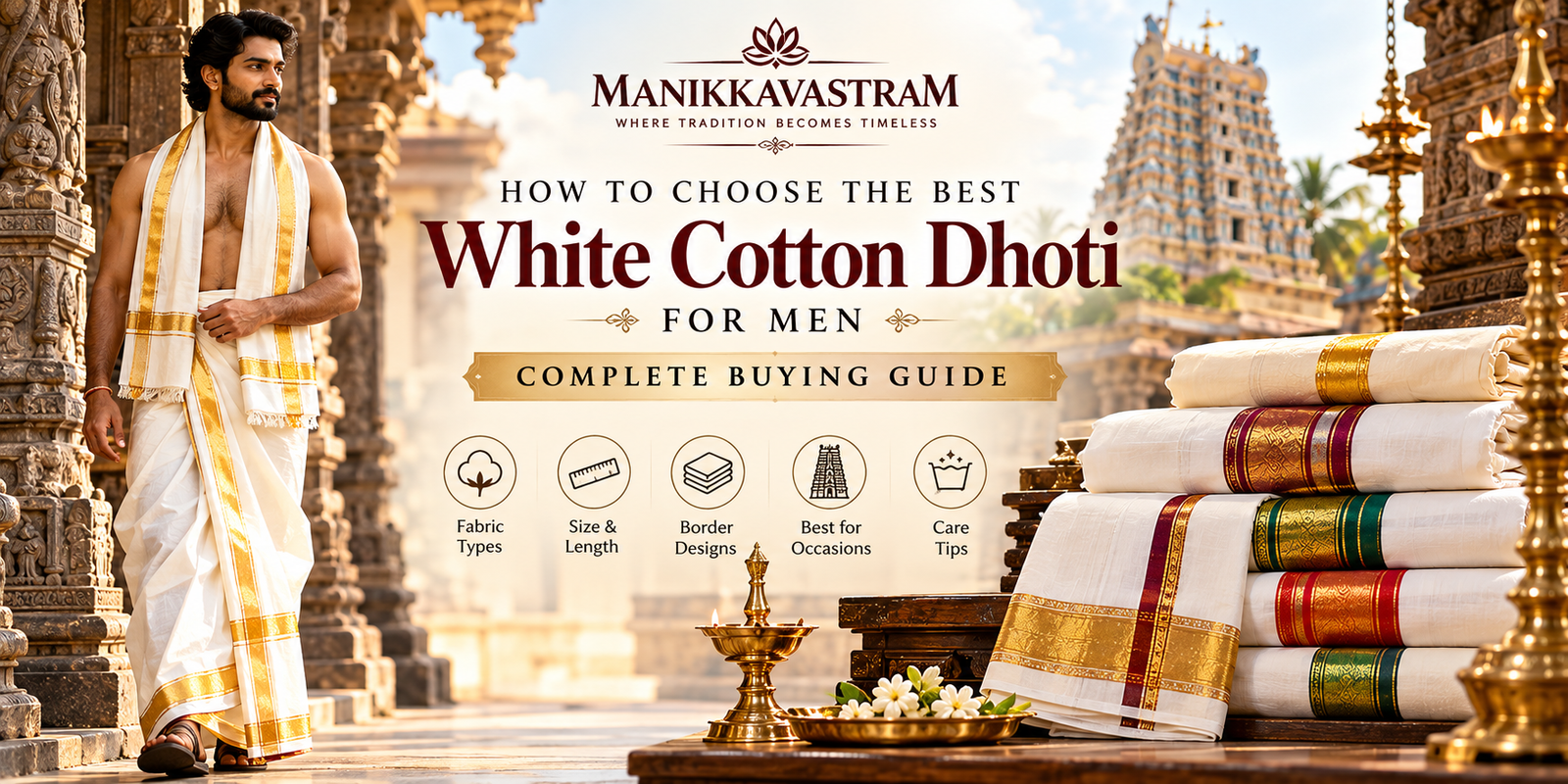
How to Choose the Best White Cotton Dhoti for Men: Complete Buying Guide
How to Choose the Best White Cotton Dhoti for Men: Complete Buying Guide
Manikkavastram — Where Tradition Becomes Timeless
Traditional Indian clothing has a special place in our culture, representing heritage, simplicity, elegance, and devotion. Among the most timeless garments for men is the white cotton dhoti, a traditional outfit worn for temple visits, religious ceremonies, weddings, festivals, and family occasions.
From daily puja to important Hindu rituals, a white dhoti continues to be a preferred choice for men who appreciate traditional Indian attire.
Whether you are purchasing your first dhoti or looking for a traditional garment for special occasions, choosing the right fabric, length, border design, and fit can make a significant difference.
In this complete buying guide, we will explain how to choose the best white cotton dhoti for men, what to consider when shopping online, and how to select a traditional dhoti that suits your needs.
1. What Is a Traditional White Cotton Dhoti?
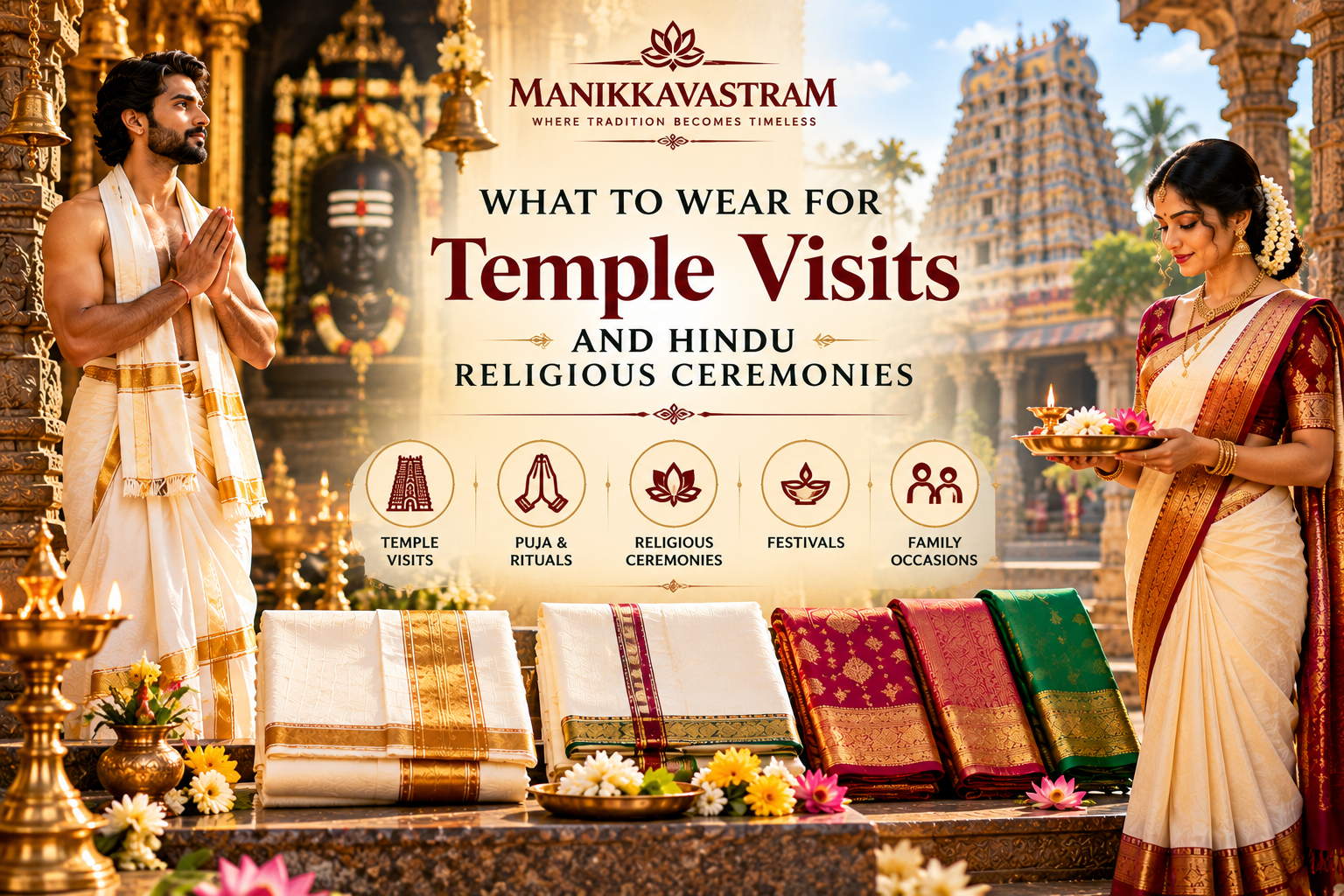
A dhoti is a traditional Indian garment worn around the waist and legs. It is particularly popular in South India and is commonly associated with temple visits, religious ceremonies, cultural events, and traditional celebrations.
A white cotton dhoti for men is a classic choice because of its simple appearance and versatility.
White dhotis are often worn during:
- Daily Hindu puja and worship
- Temple visits and darshan
- Shiva puja and other religious ceremonies
- Weddings and traditional family functions
- Festival celebrations
- Spiritual gatherings and religious events
- Cultural programmes and traditional occasions
Depending on regional customs, men may wear a dhoti with a traditional shirt, kurta, or angavastram.
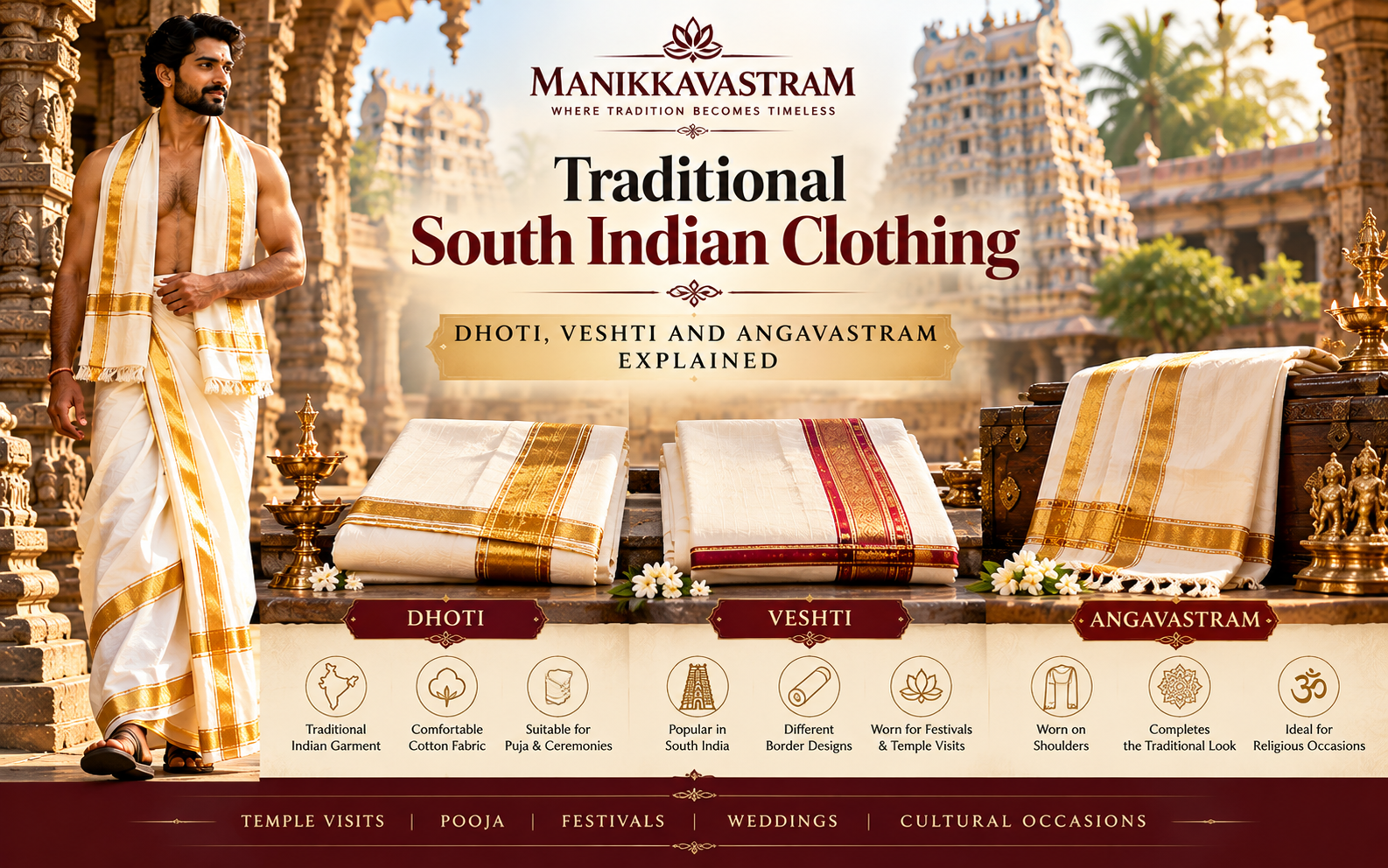
The dhoti is also known by different names in various parts of India. In Tamil Nadu and other South Indian regions, it is commonly called a veshti. Although styles and draping methods can differ, these garments share a strong connection with Indian cultural traditions.
2. Why Choose a White Cotton Dhoti for Men?
White cotton dhotis remain popular because they offer a traditional appearance suitable for many occasions.
Here are some important reasons to consider a white cotton dhoti when shopping for men's traditional wear.
A Classic Traditional Appearance
White is a widely preferred colour for traditional clothing worn during religious ceremonies and temple visits.
A white dhoti creates a clean, understated appearance and can be paired with different traditional garments.
Suitable for Religious Occasions
Many people choose a white dhoti for puja, temple visits, religious functions, and spiritual gatherings.
However, clothing requirements may differ between temples and ceremonies, so it is always advisable to follow the relevant dress guidelines.
Comfortable for Warm Weather
Cotton garments are often preferred in warm climates because cotton can feel breathable and comfortable against the skin.
The comfort of a dhoti also depends on its weave, thickness, construction, and how it is worn.
If you live in a warm region or regularly attend temple ceremonies, consider these factors when selecting your dhoti.
Easy to Pair with Traditional Clothing
A white dhoti can be paired with a traditional shirt, kurta, or angavastram.
Different border colours can also complement your preferred style, whether you are dressing for a religious function, wedding, or cultural celebration.
3. Check the Fabric Before Buying a Cotton Dhoti
Fabric is one of the most important factors to consider when buying a dhoti online.
If you specifically want a cotton dhoti, carefully review the product description to confirm the fabric composition.
Cotton Dhoti
A cotton dhoti is a popular option for daily wear, temple visits, and religious ceremonies.
When evaluating a cotton dhoti, consider:
- Fabric composition
- Weave and thickness
- Softness and comfort
- Ease of washing
- Suitability for the intended occasion
Not all cotton fabrics feel or perform the same way. The construction and quality of the fabric can influence the overall experience.
Traditional White Dhoti
A traditional white dhoti may feature a plain finish or a decorative border.
If you prefer a classic appearance, you may choose a simple white dhoti. If you want a more decorative style, consider a dhoti with a coloured or golden border.
Always check the product description rather than assuming that every white dhoti is made from cotton.
Buying tip: Look for clear fabric information, accurate product photographs, and complete measurements before placing your order.
4. Choose the Right Dhoti Length and Width
The size of a dhoti is important for comfortable wearing and proper draping.
Unlike stitched trousers, a traditional dhoti is generally wrapped around the body. Therefore, the length and width of the fabric influence how it can be worn.
Before buying a men's dhoti online, check the measurements mentioned in the product listing.
Dhoti Length
The required length can depend on your height, preferred draping style, and how much fabric you need for tucking and folding.
A longer dhoti may offer more flexibility for certain draping styles, while a shorter one may suit different preferences.
Dhoti Width
The width of the fabric affects the coverage and the way the dhoti sits when worn.
Always review both length and width rather than relying only on the product photograph.
Check the Product Measurements
When comparing dhotis online, look for:
- Total length
- Fabric width
- Border placement
- Product specifications
- Any available size or fit guidance
If the measurements are not clear, contact the seller before purchasing.
Checking these details can help you choose a dhoti that better suits your requirements.
5. White Dhoti with Golden Border or Coloured Border: Which Should You Choose?
Border design can significantly influence the appearance of a traditional dhoti.
White dhotis are available in different styles, including plain designs and garments featuring golden or coloured borders.
The best choice depends on your personal preference and the occasion.
White Dhoti with Golden Border
A white dhoti with a golden border is a popular traditional style.
It may be suitable for:
- Weddings and family ceremonies
- Religious functions
- Traditional celebrations
- Festive occasions
- Special temple visits
A golden border can create a more decorative appearance while retaining the classic white base.
White Dhoti with Maroon or Red Border
A white dhoti with a maroon or red border offers a distinctive traditional look.
This style may complement traditional shirts, kurtas, and angavastrams, depending on the colours chosen.
White Dhoti with Green Border
A green-bordered dhoti offers another traditional styling option.
It may appeal to customers who prefer coloured borders rather than a plain white garment.
Plain White Cotton Dhoti
A plain white dhoti is a simple and versatile option for people who prefer a minimal traditional appearance.
When choosing a border, review the actual product images and description to confirm its colour and design.
6. Which Dhoti Is Best for Temple Visits and Puja?
A traditional white dhoti is a popular garment for temple visits and Hindu religious ceremonies.
However, the best choice depends on the occasion, personal comfort, and any specific dress requirements.
For Daily Puja
A simple, comfortable dhoti may be suitable for daily worship at home.
Choose a garment that is easy to wear, wash, and maintain.
For Shiva Puja and Religious Ceremonies
Many devotees prefer traditional white clothing for religious occasions.
A white dhoti, paired with an appropriate traditional upper garment or angavastram, can create a classic appearance.
Specific rituals may have their own clothing customs, so follow the instructions provided by the temple or ceremony organiser.
For Temple Visits
A white cotton dhoti or traditional veshti is a common choice for men visiting temples.
Before visiting, check whether the temple has any dress code requirements.
For Weddings and Festivals
A white dhoti with a decorative border can be a suitable option for weddings, festivals, and family functions where traditional clothing is preferred.
Choosing the right style for the occasion helps you maintain a traditional appearance while feeling comfortable.
7. Dhoti vs Veshti: What Is the Difference?
The terms dhoti and veshti are closely related, but their usage varies by region.
A dhoti is a traditional Indian garment worn around the waist and legs. It is found in different forms across several parts of India.
Veshti is a term particularly associated with traditional men's clothing in Tamil Nadu and other South Indian communities.
Both garments are used for religious ceremonies, temple visits, weddings, and cultural occasions.
Regional differences may include:
- Draping styles
- Fabric dimensions
- Border designs
- Traditional colours
- Local clothing customs
When shopping online, do not rely on the name alone. Review the product photographs, measurements, fabric composition, and description to understand exactly what you are purchasing.
If you are looking for South Indian traditional clothing, a white dhoti or veshti can be a useful addition to your wardrobe.
8. How to Care for Your White Cotton Dhoti
Proper care can help maintain the appearance and usability of your dhoti.
White garments may require particular attention to prevent stains and discolouration.
Follow these general care tips, while always prioritising the instructions provided with your specific product.
Wash According to the Fabric Instructions
Check the washing instructions before cleaning your dhoti.
If the product permits machine washing, use the recommended settings. Hand washing may be appropriate for certain garments.
Separate White Clothing
Wash white garments separately from strongly coloured clothes to reduce the risk of colour transfer.
Treat Stains Promptly
If your dhoti becomes stained, follow suitable fabric-care instructions and treat the stain as soon as practical.
Avoid harsh cleaning methods that could damage the fabric or border.
Dry Properly
Follow the garment's care instructions when drying it.
Proper drying can help prevent unpleasant odours and maintain freshness.
Store in a Clean, Dry Place
Make sure the dhoti is dry before folding and storing it.
Keep it in a clean, dry cupboard to help protect it from moisture and dust.
These simple practices can help you care for your traditional clothing over time.
9. What to Check When Buying a White Cotton Dhoti Online
Shopping online makes it convenient to compare traditional clothing from home. However, reviewing the product details is essential before making a purchase.
Use this checklist when buying a white cotton dhoti online.
1. Fabric composition: Confirm whether the garment is cotton or another material.
2. Length and width: Check the exact dimensions provided in the listing.
3. Border design: Review the border colour, pattern, and placement.
4. Product photographs: Examine the images to understand the appearance of the garment.
5. Intended use: Consider whether the dhoti is for daily wear, temple visits, puja, weddings, or festivals.
6. Care instructions: Check the recommended washing and maintenance methods.
7. Delivery information: Review shipping charges, estimated delivery timelines, and service availability.
8. Return policy: Read the seller's return and exchange conditions before placing an order.
9. Product description: Confirm that the garment matches your requirements.
Taking a few minutes to review these details can help you make a more informed purchase.
10. Explore Traditional Men's Wear at Manikkavastram
At Manikkavastram, we celebrate the timeless appeal of Indian traditional clothing.
Our store is designed for customers who appreciate traditional garments for religious ceremonies, cultural celebrations, festivals, and everyday wear.
Whether you are searching for a classic white dhoti, a traditional veshti, or clothing for a special occasion, explore the available collection and product descriptions to find a style that suits your needs.
When shopping for a men's dhoti, remember to check the fabric, measurements, border design, and care instructions before placing your order.
Discover traditional clothing that reflects India's cultural heritage and the elegance of timeless styles.
Visit Manikkavastram: https://www.manikkavastram.com/
Manikkavastram — Where Tradition Becomes Timeless.
Frequently Asked Questions About White Cotton Dhotis for Men
1. Which white cotton dhoti is best for men?
The best white cotton dhoti depends on your preferred fabric, length, width, border design, and intended use. For temple visits and traditional ceremonies, many men prefer a simple white dhoti or one with a decorative border.
2. Can I wear a white cotton dhoti for daily puja?
Yes, a white cotton dhoti can be worn for daily puja if it suits your preferences and the customs of your religious practice.
3. Is a white dhoti suitable for temple visits?
A white dhoti is a traditional choice for temple visits. However, check the specific temple's dress code before attending.
4. What is the difference between a dhoti and a veshti?
Both are traditional garments worn around the waist and legs. The term veshti is particularly associated with South Indian clothing traditions, while dhoti is used more broadly across India.
5. Which dhoti border is best for weddings?
Golden, maroon, red, and other decorative borders can be suitable for traditional wedding attire. Choose according to your personal style, the occasion, and any applicable dress customs.
6. How do I choose the correct dhoti size?
Review the product's length and width measurements. Consider your height, preferred draping style, and the amount of fabric you need for comfortable wearing.
7. How do I maintain a white cotton dhoti?
Follow the garment's care instructions, wash it appropriately, separate white clothing from coloured garments, treat stains promptly, and store the dhoti in a clean, dry place.
8. Can I wear a dhoti with an angavastram?
Yes. A dhoti paired with an angavastram is a traditional combination for temple visits, puja ceremonies, weddings, and other cultural occasions.
9. What should I check before buying a dhoti online?
Check fabric composition, length, width, border design, product photographs, care instructions, delivery information, and the seller's return policy.
10. Where can I buy traditional men's clothing online?
You can explore traditional Indian clothing through online ethnic wear stores. Visit Manikkavastram to browse the available collections and review individual product details before purchasing.